arequipa · Arequipa City Tour
Arequipa City Tour
Arequipa's Historic Centre received UNESCO World Heritage status in 2000.
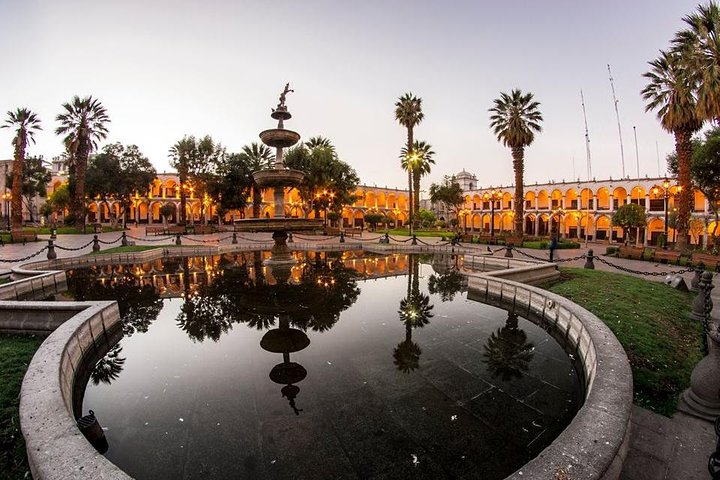
🏛️ Why the Historic Centre is UNESCO Listed
Arequipa's Historic Centre received UNESCO World Heritage status in 2000.
The designation recognized the outstanding fusion of Spanish Baroque architecture and Andean Mestizo artistic traditions.
Sillar stone (volcanic ignimbrite) enabled ornate carving that wood and brick could not — creating a uniquely Arequipeño architectural style.
Over 500 historic buildings remain standing in the protected zone — many still in active use as homes, shops, and restaurants.
Top Arequipa City Tours — Compared
Here are the best-rated guided city tours bookable on Viator:
Tour |
Duration |
Price (USD) |
Includes |
Best For |
|
2.5 hrs |
From $10 |
Historic downtown walk, traditions & legends, pisco sour + dessert tasting |
Best overall value |
|
|
Historic & Colonial City Tour + Santa Catalina Monastery |
3.5 hrs |
From $58 |
St. Lazarus & Yanahuara districts, Santa Catalina, Cathedral, Carmen Alto & Yanahuara viewpoints (coach) |
Most popular combo |
|
Private City Tour: Juanita Museum, Santa Catalina & Colonial Suburbs |
5 hrs |
From $192 |
Private van, Juanita Mummy Museum, Santa Catalina, Cayma/Sabandía/Yanahuara suburbs, traditional lunch |
Deep cultural immersion |
|
Walking Tour: History, Legends & Mysteries |
2.25 hrs |
From $28 |
Historic centre walk, local legends & anecdotes, traditional dessert + drink tasting |
History & legend fans |
|
Private Guided City Tour (Pickup Included) |
4 hrs |
From $59 |
Private guide, iconic White City sites, flexible custom pace, hotel pickup |
Families, flexible pace |
👉 Book your Arequipa city tour on Viator →
Top 10 Attractions in Arequipa's Historic Centre
Here's what to see, how long to spend, and what each attraction's highlight is:
Attraction |
Type |
Time Needed |
Entry Fee |
Highlight |
|
Plaza de Armas |
Main square |
20–30 min |
Free |
Finest colonial square in southern Peru |
|
Arequipa Cathedral (Catedral) |
Baroque church |
20–30 min |
Free (museum $3) |
Twin-towered sillar facade, built 1612 |
|
La Compañía de Jesús |
Jesuit church |
15–20 min |
$2 |
Most ornate Baroque facade in the Americas |
|
Santa Catalina Monastery |
Colonial convent |
2–3 hrs |
$14 |
City-within-a-city — see dedicated guide |
|
Yanahuara Viewpoint & Arch |
Mirador + arch |
30–45 min |
Free |
Best El Misti panorama + sillar arch corridor |
|
Juanita Museum (Santuarios Andinos) |
Inca mummy museum |
1–1.5 hrs |
$12 |
500-year-old mummified Inca girl from Ampato volcano |
|
Sabandía Mill (Molino de Sabandía) |
Colonial watermill |
1 hr |
$3 |
1621 watermill in countryside — scenic drive |
|
Mercado San Camilo |
Food market |
45–60 min |
Free entry |
Queso helado, picanterías row, produce stalls |
|
Palacio del Moral (Casa del Moral) |
Colonial mansion |
30 min |
$3 |
Best example of a colonial sillar mansion interior |
|
San Francisco Church & Convent |
Colonial church |
15 min |
Free |
Franciscan complex with painted cloister |
The Architecture of Sillar: Understanding What You're Looking At
To appreciate Arequipa's buildings, you need to understand sillar. Sillar is an ignimbrite — a volcanic rock ejected by Chachani and other nearby volcanoes during prehistoric eruptions and deposited as thick ash layers that compressed into soft, workable stone. It's extraordinarily easy to carve, which is why every major building in Arequipa's historic centre is decorated with elaborate relief sculptures that would be impossible in harder stone.
The white-cream color of sillar also reflects strong Andean sunlight brilliantly — making the city genuinely glow in afternoon light. Here's an architectural guide to the main buildings:
Building |
Built |
Style |
Key Feature |
Sillar Detail |
|
Cathedral |
1612 (rebuilt 1868) |
Neoclassical Baroque |
Twin towers |
Smooth ashlar blocks, restrained ornament |
|
La Compañía de Jesús |
1698 |
Churrigueresque Baroque |
Carved facade |
Dense floral + geometric relief carving |
|
Santa Catalina Monastery |
1580 |
Colonial / Mudejar |
20,000 m² complex |
Plain exterior, richly painted interior lanes |
|
Casa del Moral |
1730s |
Colonial Baroque |
Carved stone doorway |
Puma and serpent motifs on lintel — Andean symbolism |
|
Yanahuara Church |
1750 |
Mestizo Baroque |
Carved arch row |
Indigenous flora carved into sillar arches |
|
San Francisco Convent |
1696 |
Colonial |
Painted cloister |
Ochre-painted arcaded courtyard |
La Compañía de Jesús: The Crown Jewel of Arequipa Baroque
La Compañía de Jesús church (1698) is considered the single most elaborately carved Baroque facade in the Americas — a judgment backed by architectural historians and not just tourist-brochure hyperbole. The entire surface of the two-story facade is covered in relief carving: intertwining vines, indigenous animals, human figures, saints, angels, and abstract floral patterns, all executed in soft sillar that the Jesuit-trained indigenous craftsmen transformed into stone lacework. Stand back 20 meters to see the full composition.
Yanahuara Arch Corridor: The Postcard Image of Arequipa
The Yanahuara neighborhood is 10 minutes by taxi from the Plaza de Armas and contains one of the most photographed views in Arequipa: a row of sillar arches along the mirador wall, each framing a different angle of the volcanic landscape. El Misti (5,822 m), Chachani (6,057 m), and Pichu Pichu (5,664 m) are all visible on clear days. The best time is late afternoon (4–6 PM) when the light turns golden and the volcanoes catch sunset colors. The arches themselves are carved with historical inscriptions from Arequipa's independence era.
Juanita — The Ice Maiden of Ampato: A Museum Not to Miss
The Museo Santuarios Andinos (Juanita Museum) is one of the most extraordinary small museums in Peru. In 1995 archaeologist Johan Reinhard discovered the frozen body of a young Inca girl on the summit of Volcán Ampato at 6,380 meters — perfectly preserved for approximately 500 years by the sub-zero temperatures of the high Andes. She is estimated to have been 12–15 years old and was sacrificed as a capacocha offering to the mountain god.
The preservation is extraordinary: her clothing (elaborate Inca textiles), hair, skin, and facial features are intact. The guided museum tour takes you through the discovery story, the Inca ritual context (capacocha sacrifices were the highest religious honor, not a punishment), and the artifacts recovered from the summit — ceramics, gold figurines, and textiles.
Detail |
Information |
|
Full Name |
Museo Santuarios Andinos — Universidad Católica de Santa María |
|
Location |
La Merced 110, Centro Histórico (2 blocks from Plaza de Armas) |
|
Entry Fee |
~$12 USD adults | $6 students | Tours in EN/ES included |
|
Opening Hours |
Mon–Sat 9 AM–6 PM | Sun 9 AM–3 PM |
|
Who is Juanita |
Mummified Inca girl (~12–15 yrs) sacrificed on Volcán Ampato c. 1450 AD |
|
Discovery |
Found by archaeologist Johan Reinhard in 1995 at 6,380 m elevation |
|
Preservation |
Frozen for 500 years — clothing, skin, hair intact. One of best-preserved Inca mummies |
|
Also on Display |
Inca textiles, pottery, figurines, gold objects from the summit offering |
|
Time Needed |
1–1.5 hours including guided tour |
🏛️ Juanita Visit Tips
Book a morning slot — the guided tour leaves every 30–45 minutes and you'll queue in peak season.
Juanita is kept in a climate-controlled case at −20°C and viewed through a glass panel — photography is permitted.
The guide's explanation of the capacocha ritual and Inca sacrifice context is essential — don't skip the tour introduction.
The textile collection from the summit offering is among the finest Inca fabrics in existence.
Self-Guided 10-Stop Walking Route
This route covers all the major historic centre highlights on foot in 4–5 hours, with a taxi needed for the Yanahuara section at the end:
Stop |
Landmark |
Duration |
What to Do |
|
1 |
Plaza de Armas (start) |
20 min |
Sit on the fountain bench, orient yourself — El Misti visible on clear mornings |
|
2 |
Arequipa Cathedral |
20 min |
Enter free — see the interior pipe organ, Baroque altar, crypt access |
|
3 |
La Compañía de Jesús |
15 min |
Study the facade — most ornate carved sillar in Peru. Enter for chapel interior |
|
4 |
Calle Santa Catalina (walking) |
10 min |
Main artisan shopping street — alpaca goods, ceramics, anisado |
|
5 |
Santa Catalina Monastery |
2 hrs |
Buy ticket here — see dedicated guide for full zone tour |
|
6 |
Mercado San Camilo |
45 min |
Queso helado + picantería set lunch or snack |
|
7 |
Casa del Moral |
20 min |
Colonial mansion — carved stone doorway is the finest in Arequipa |
|
8 |
Taxi to Yanahuara |
15 min taxi |
The arch corridor + El Misti viewpoint — best at sunset |
|
9 |
Yanahuara Arch & Mirador |
30 min |
Walk the arch row — each arch frames a different volcano view |
|
10 |
Dinner: La Nueva Palomino or Chicha |
1.5 hrs |
Rocoto relleno to finish the day — you've earned it |
Arequipa Beyond the Historic Centre
The best of Arequipa is in the historic centre, but the city rewards exploration beyond:
- Sabandía Mill (Molino de Sabandía): A restored 1621 working watermill 8 km from the city centre, set in green countryside with El Misti as backdrop. A 30-min taxi ride. Open daily, entry $3. The drive through the pampas is pleasant.
- Mansión del Fundador: A 16th-century colonial country house 9 km from the centre, with gardens, colonial furniture, and a restaurant. Combined with Sabandía as an afternoon countryside excursion.
- Sachaca district: The anisado distillery area, 20 min west of the centre. Several artisan distilleries offer tastings of the local anise spirit.
- Cayma: A traditional residential neighborhood with a beautiful 18th-century church and some of Arequipa's best local restaurants — off the tourist circuit entirely.
Practical Tips for Exploring Arequipa
- Wear comfortable shoes — sillar cobblestones look charming but are uneven and tiring over 3+ hours.
- Start at the Plaza de Armas by 9 AM — the centre fills with group tours by 10:30 AM.
- Bring sunscreen — Arequipa at 2,335 m has intense UV even on overcast days. The "white city" glow comes partly from reflective sillar amplifying the sun.
- Carry soles — most small shops, market stalls, and church entry fees are cash-only.
- Use Uber for the Yanahuara leg — registered taxis are fine but Uber is cheaper and app-trackable.
- Budget 2–3 hours for Santa Catalina alone — it merits its own half-day visit, separate from the city tour circuit.
Frequently Asked Questions
How long does an Arequipa city tour take?
A standard guided city tour runs 3–4 hours and covers the Plaza de Armas, Cathedral, La Compañía, and Yanahuara. Adding Santa Catalina Monastery extends it to 5–6 hours. A self-guided full day including San Camilo Market, Juanita Museum, and Sabandía Mill takes 7–8 hours total.
Is the Arequipa city tour walkable?
The historic centre is fully walkable — all the major sites are within a 1.5 km radius of the Plaza de Armas. Yanahuara is the exception: 10 minutes by taxi (about $3). The cobblestone surfaces are manageable but hard on knees over a full day — bring good shoes.
What is the best free thing to do in Arequipa?
The Yanahuara Arch Corridor and viewpoint is completely free and arguably the most beautiful spot in Arequipa. The Plaza de Armas, La Compañía exterior, and San Francisco Church are also free. A walk down Calle Santa Catalina costs nothing and passes some of the finest sillar architecture in the city.
Is a guide necessary for the Arequipa city tour?
Not strictly — the Historic Centre is very walkable and well-signed. However, a guide adds enormous value at La Compañía (explaining the iconographic program of the facade), at Santa Catalina (the individual nun stories), and at the Juanita Museum (the capacocha ritual context). Budget travelers can do the walking circuit independently and save the guide cost for Santa Catalina or Juanita only.
What is Arequipa's nickname and why?
Arequipa is called La Ciudad Blanca — The White City — because virtually all its historic buildings are constructed from sillar, a cream-white volcanic stone from nearby Chachani volcano. In strong Andean sunlight, the whole city appears to glow white. The name is also associated with the city's historically lighter-skinned population of Spanish colonial descent, though the architectural explanation is the one universally accepted today.
Can you visit Arequipa in one day?
Yes — a single full day covers the historic centre highlights well: Plaza de Armas + Cathedral + La Compañía (morning), Santa Catalina Monastery (mid-morning to early afternoon), San Camilo Market lunch, Juanita Museum (afternoon), Yanahuara at sunset, dinner in a picantería. It's a full day but very doable from Lima as a 2-day/1-night trip.
What is the best time to visit Arequipa?
Year-round — Arequipa has over 300 sunny days per year. The dry season (April–November) is best for Colca Canyon trips but the city itself is beautiful any time. December–March brings afternoon rain showers but mornings are always clear. Avoid national holidays (Fiestas Patrias end-July, Christmas/New Year) when accommodation prices spike and the plaza is crowded.
Complete your Arequipa experience:
Tours mentioned in this guide
- Arequipa, Historic and Colonial City and Santa Catalina Monastery View on Viator
- Private Arequipa City Tour: Juanita Museum, Santa Catalina and Colonial Suburbs View on Viator
- Walking tour Arequipa: history, legends & mysteries View on Viator
- Guided tour of the city of Arequipa in private service View on Viator